|
Mt. Rinjani Lombok Trekking Information
Welcome to Mt. Rinjani Lombok Trekking Club & Center Organizer Information, Rinjani
Lombok Trekking Guide, Rinjani Lombok Trekking Travel Agent, We provide all information
about climbing and trek to mount Rinjani volcano Lombok island
Indonesia Asia. And service with safe, fun, exception, and help
you to finding unforgettable an experience in your life time at
the excellent nature of adventure.
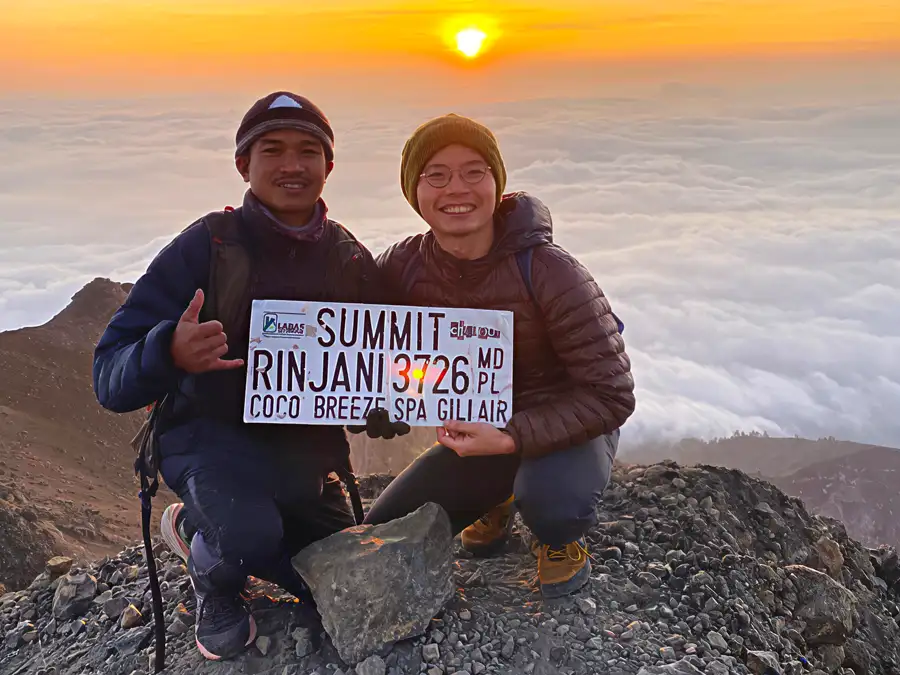
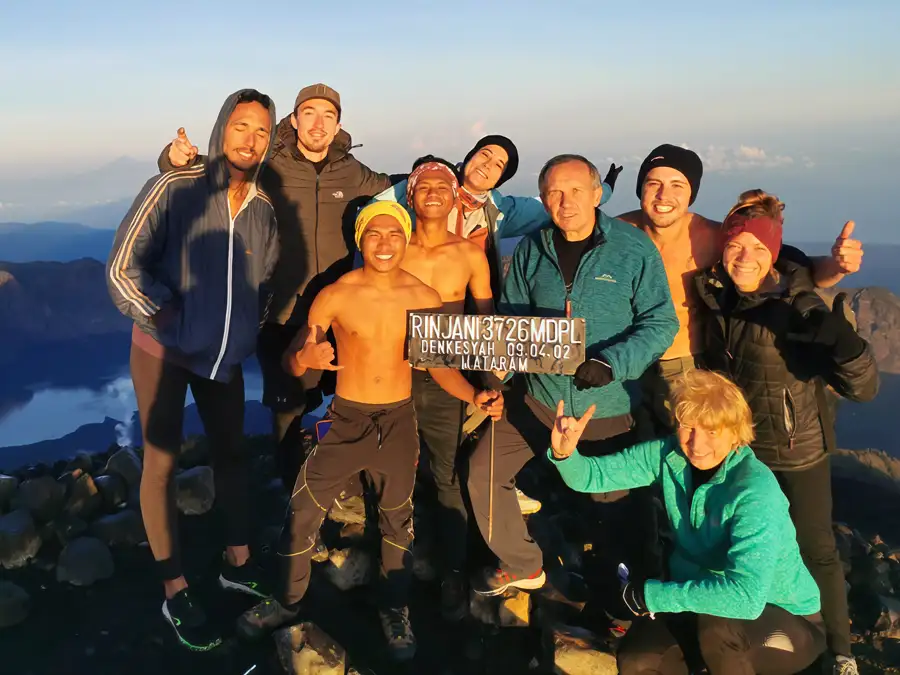
Mt. Rinjani 3726 M
A
prestigious 2004 World Legacy Award for environmental and social
leaders in tourism was given to the Rinjani Trek Management Board
by Conservation International (CI) and National Geographic
Traveler magazine, in a ceremony at the National Geographic
Society in Washington DC on 8 June 2004. The Rinjani Trek in
Gunung Rinjani National Park in Lombok Indonesia was the winner of
the Destination Stewardship Award, selected as a tourism
destination that best demonstrates effective protection of its
natural and cultural environment.
The Rinjani Trek was lauded in the award citation as “a place
doing superb work in protecting its overall natural and cultural
heritage, the volcanic heart of the island of Lombok, Indonesia”.
Visitors to this tropical island enjoy long jungle treks to the
awe-inspiring crater valley, waterfalls and hot springs, and
emerge from the forest canopy to enjoy an amazing panoramic ocean
view.
The Rinjani program is exemplary for its strong partnership among
local community groups, tourism industry and national park, and
has successfully withstood the recent deep dip in Indonesia’s
tourism.
Mount Rinjani or
Gunung Rinjani is an active volcano in Indonesia on the island of
Lombok. It rises to 3,726 m (12,224 ft), making it the third
highest volcano in Indonesia. The first historical eruption
occurred in September 1847. The most recent eruption of Mount
Rinjani was on 10 May 2009. The volcano had started erupting again
on 27 April 2009, and the mountain was closed as the eruptions
intensified with plumes of smoke and ash as high as 8,000 m.
The 6 km by 8.5 km oval-shaped caldera is filled partially by a
crater lake known as Segara Anak ('Child of the Sea') and is
approximately 2000m above sea level and estimated at being around
200m deep) the caldera also contains hot springs. The eruptions of
1994, 1995, and 1996 have formed a small cone, Gunung Baru (or
'New Mountain' - approximately 2300m above sea level) in the
center of the caldera and lava flows from these eruptions have
entered the lake. This cone has since been renamed Mount Barujari
(or 'New Finger').
The highlands are forest clad and mostly underdeveloped. The
lowlands are highly cultivated. Rice, soybeans, coffee, tobacco,
cotton, cinnamon, and vanilla are the major crops grown in the
fertile soils of the island.
The volcano and the caldera are protected by a national park
established in 1997. Tourism is increasingly popular with trekkers
able to visit the rim, make their way into the caldera or even to
make the more arduous climb to the highest point fatalities,
however, are not uncommon.
The Rinjani mountain is the
second highest peak active volcano in Indonesia and absolutely a
challenging mountain walk and you must be prepared with good
equipment, warm and windproof clothing if you want to make
adventure trekking to the summit of rinjani mountain 3726 m.
Trekking to Rinjani mountain lombok Indonesia can attract severe
storms, lightening and strong winds. When the weather is settled,
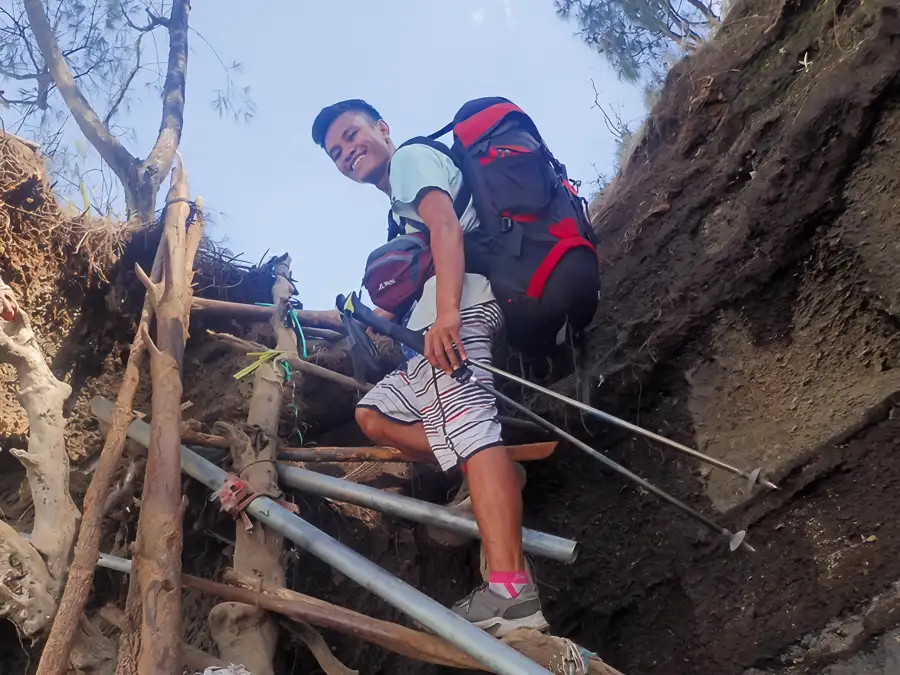
the sun is intense and the nights frosty. Parts of the trail are
steep and slippery.
Beware of bad weather and risks of exposure to the wet and cold
(hypothermia). If caught in an electrical storm, take shelter and
avoid prominent ridges. Beware of snakes, and stinging insects and
plants. Leeches can be a nuisance in the wet season.
|
|
Erupted History
The June 1994 eruption. At 02:00 pm, on
June 3rd, 1994, Barujari come
began erupting by sending an ash plume 500 m high. On June 8th,
press report described emission of "smoldering lava" and "thick
smoke", as well as ash fall in nearby villages from an ash cloud
rising 1,500 m above the summit. Between 3rd and 10th of June, up
to 172 explosions could be heard each day from the Sembalun Lawang
volcano observatory (15 km NE). During this period, seismic data
indicated a dramatic increase in the number of explosions per day,
from 68 to 18,720. Eruptions were continuous at least through 19th
of June, with maximum ash plume heights of 2,000 m on 9th to 11th.
The ash plume generally drifted SE, depositing up to 30 mm of ash
on the island. Strombolian eruptions ejected pyro clastic material
> 2m in size as high as 600 m above the vent; this material fell
in a restricted proximal area around the cone and in the lake.
Lava flows began on 8th of June and partially covered previous
lava flows from Rombongan (in 1944) and Barujari (in 1966).
A series of aircraft warnings based on pilot reports and weather
satellite images indicated much larger plumes than suggested by
the ground observations. First an eruption at about 12:00 on June
7th produced a long plume that caused a large number of aviation
warnings. The plume, located on satellite imagery, extended 120 km
S of Rinjani and was beginning to disperse by 15:30. A pilot
report at 16:45 indicated a "smoke" plume to 13,500 m altitude
moving ESE, but by 23:45 the plume was in distinguish- able on
satellite imagery. The imagery showed a plume around 06:33 on the
8th of June, which extended at least 83 km SE of the volcano.
Aircraft were advised to avoid this area to an altitude of 10,500
m. above sea level.
Have Enjoy a Trek and Good Luck..!!! |